The reVinyled Process
From Rescued Vinyl Record to Something New.
Every reVinyled piece begins with a real record that has reached the end of its listening life and still has plenty of story left.
Each record is intentionally selected, composed, cut, shaped, filed, drilled, finished, and assembled by hand in Philadelphia using traditional jewelry making tools and techniques.
Where It Begins
The Record Decides More Than You Might Think.
Before a saw ever touches the vinyl, I study the record itself. Label art, grooves, typography, color, artist and song information, existing damage, and available space all help determine what can come from it.
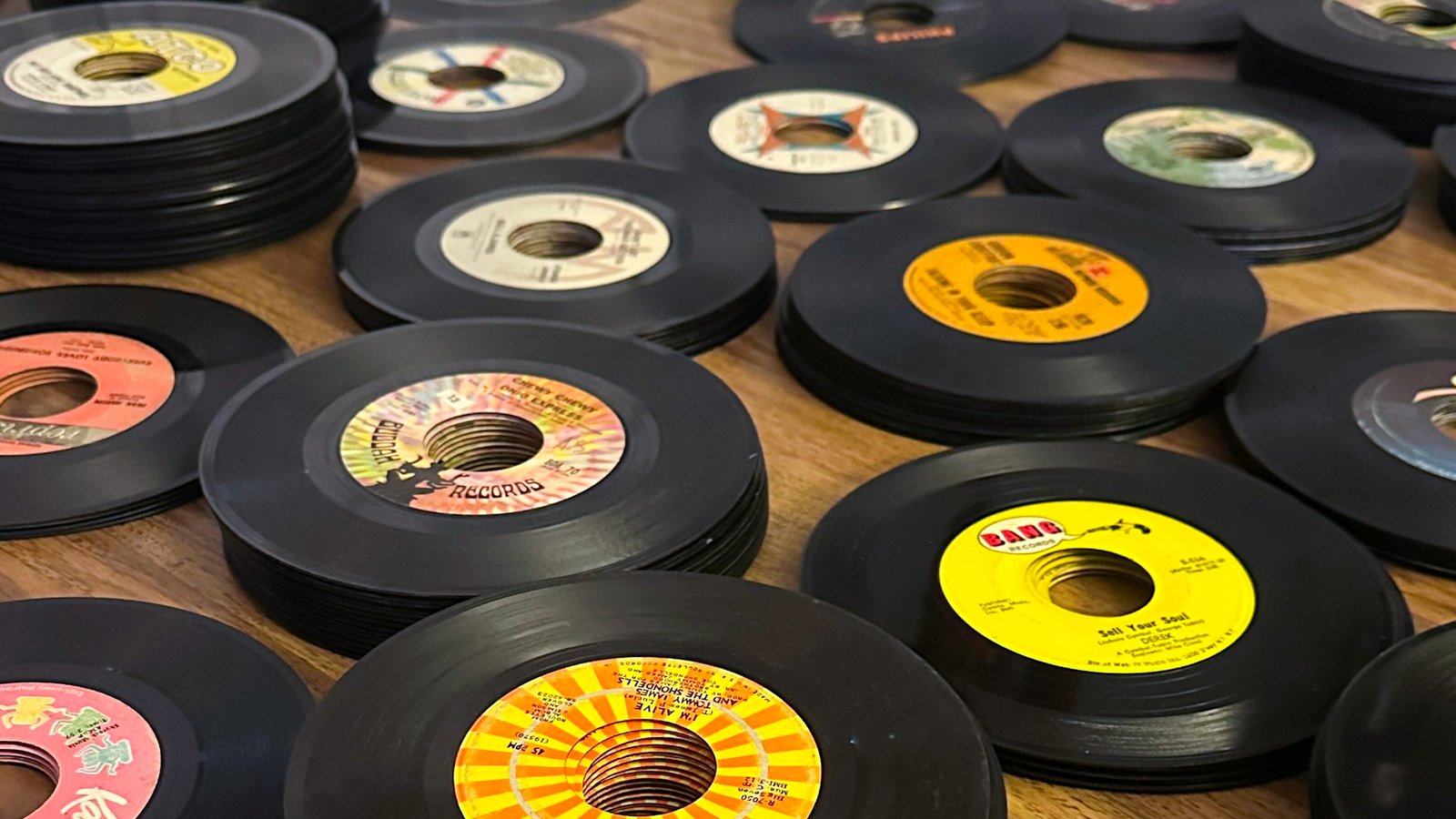
I usually work from a group of roughly twelve to fifteen rescued records at a time. Most reVinyled earrings begin with 45 rpm records. Larger 12 inch records are used when a larger piece, artwork, or specific commission needs more room.
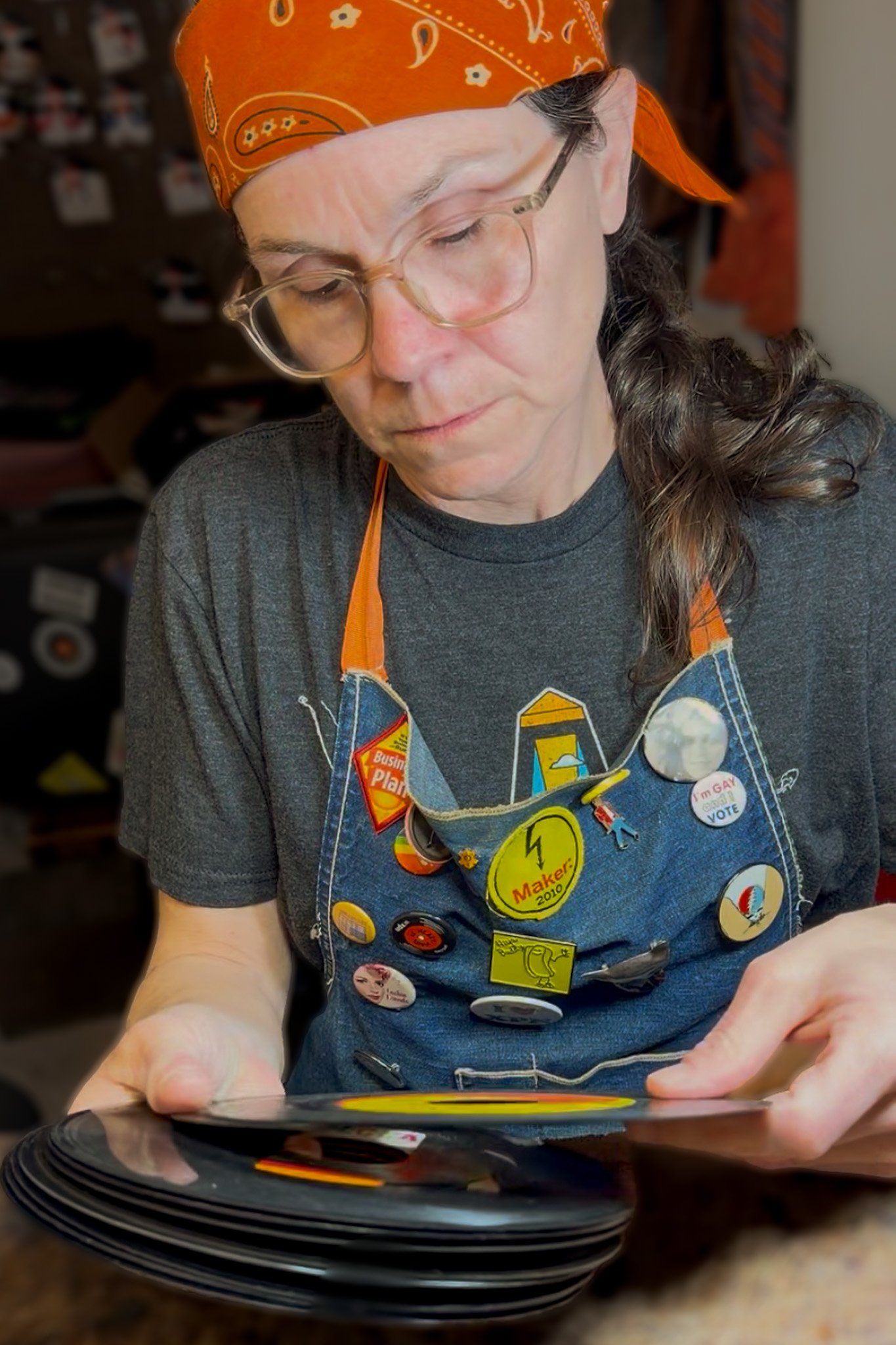
Choose the Records
Each working group begins with records that still have something visually worth preserving. Color, label design, typography, grooves, wear, and unexpected details all become part of the possibilities.
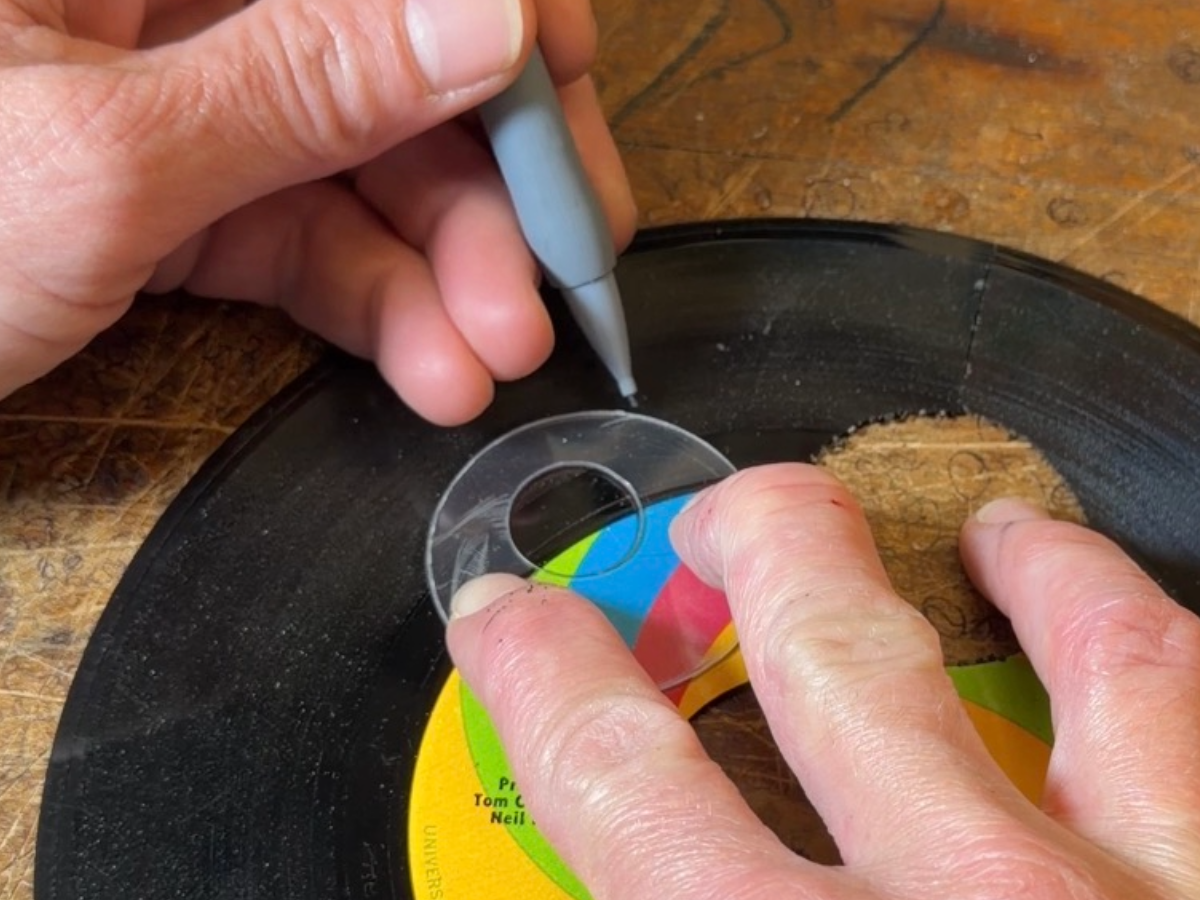
Compose the First Round
I begin with the largest earring shapes so the strongest graphics, artist or song information, typography, color, and grooves have room to become part of the composition. Each chosen shape is traced before anything is cut.
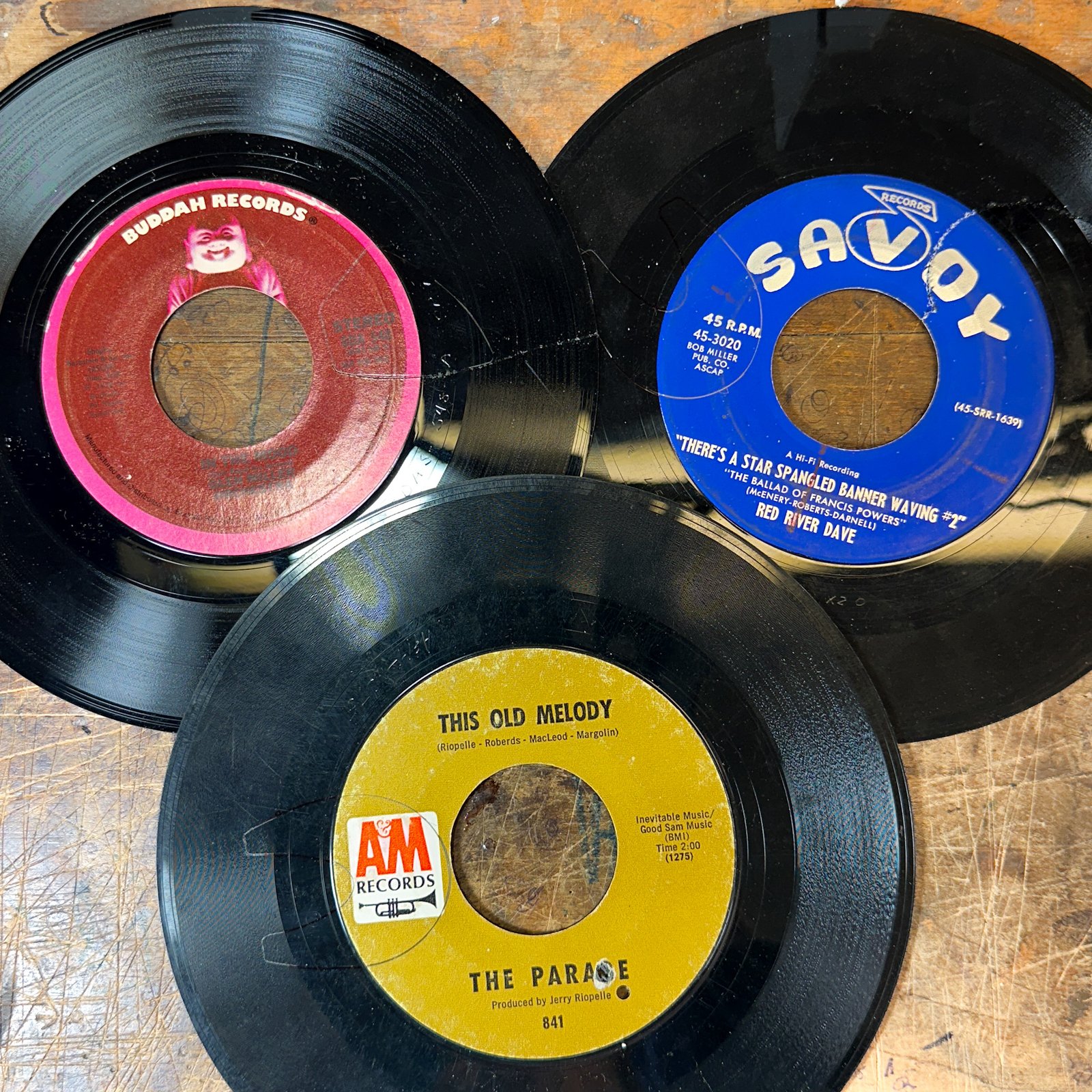
Document the Source
After the first compositions are traced, I photograph the front and back of every source record so the exact album can remain connected to the jewelry made from it.
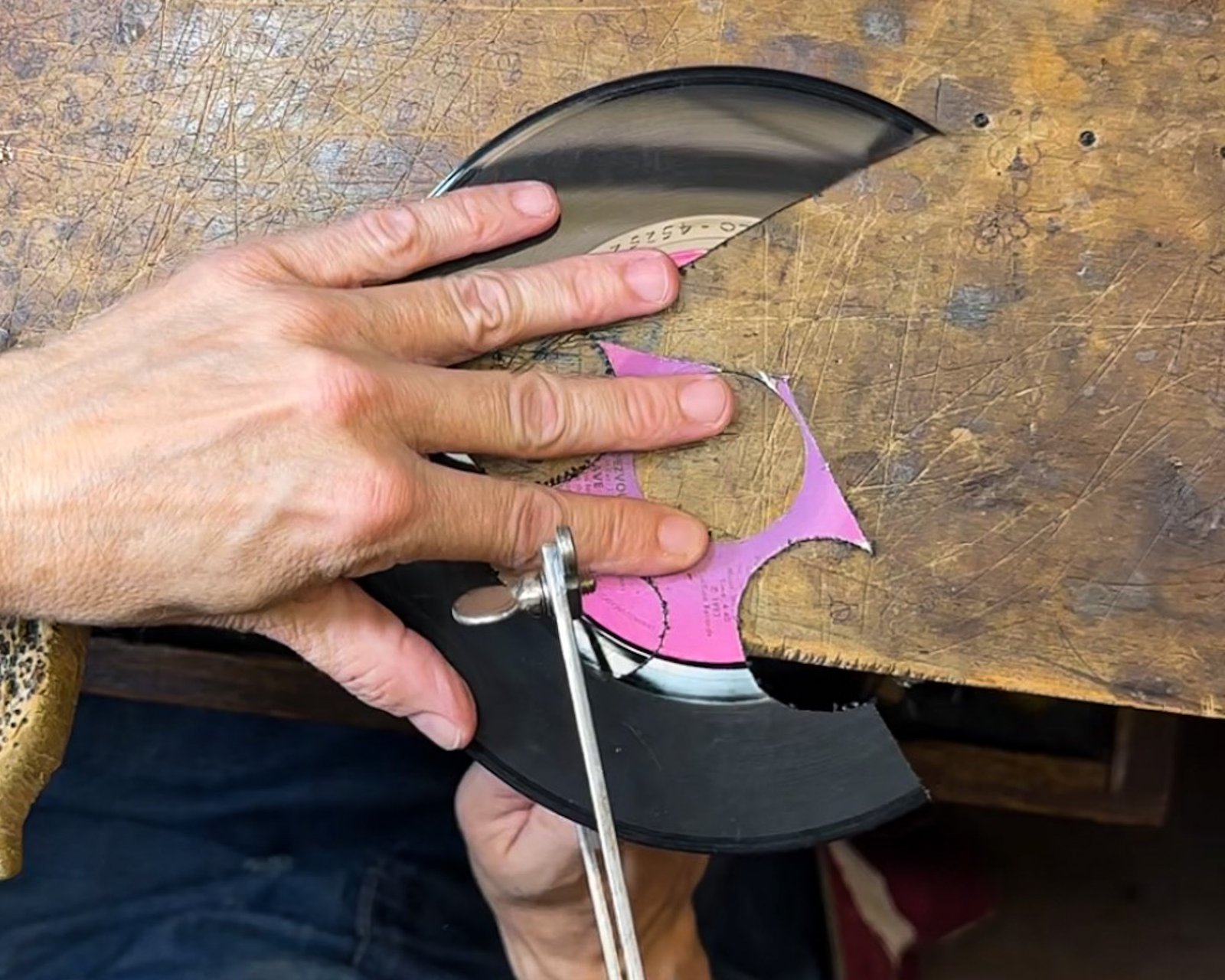
The Cut Is Part of the Design.
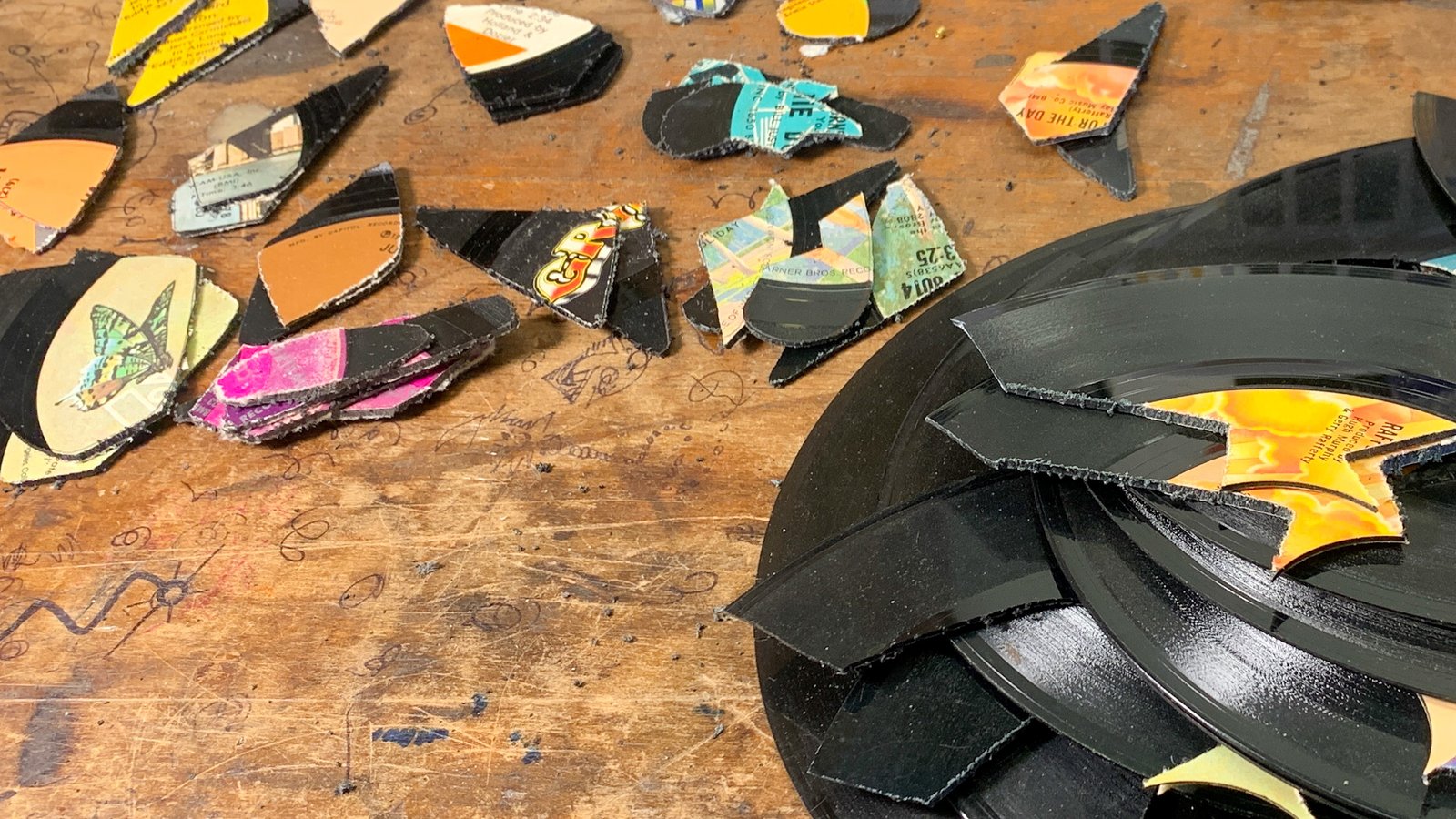
Only after the first compositions are traced and the source records are documented does cutting begin. Each piece is cut individually with a traditional jeweler's saw, following the placement already chosen from that specific record.
After the largest pieces are removed, I return to what remains and compose the vinyl again for the next size.
A Signature Balance
Every reVinyled piece is intentionally composed with both label and exposed vinyl. The label carries color, typography, artist and song details, while the vinyl keeps the grooves and original material clearly visible.
Both earrings in a pair are cut from the same physical record, preserving their shared visual and musical identity.
Medium designs come next, followed by small, extra small, button studs, mini studs, and other uses the remaining vinyl can support. Each cutting round changes the material, so I return to the record and compose it again rather than treating what remains as random scrap.
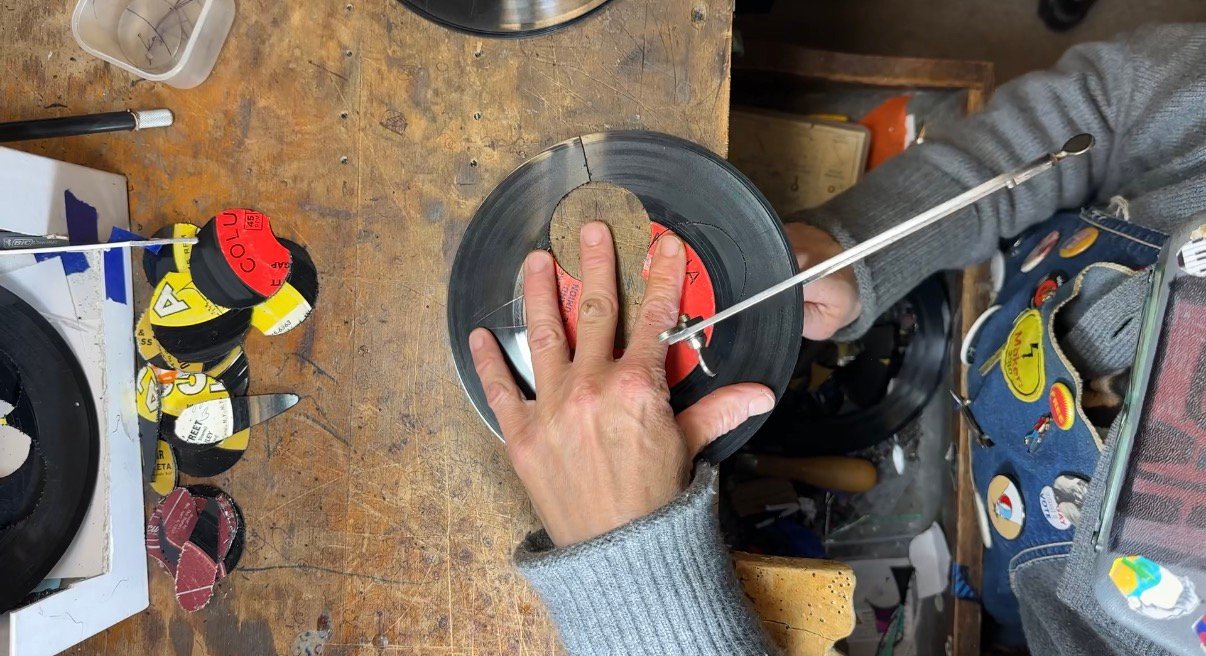
After the Cut
The Saw Is Only the Beginning.
Once a piece leaves the record, the work becomes traditional bench jewelry. Each piece is shaped, hand filed, drilled, finished, and prepared individually before it is ready to wear.
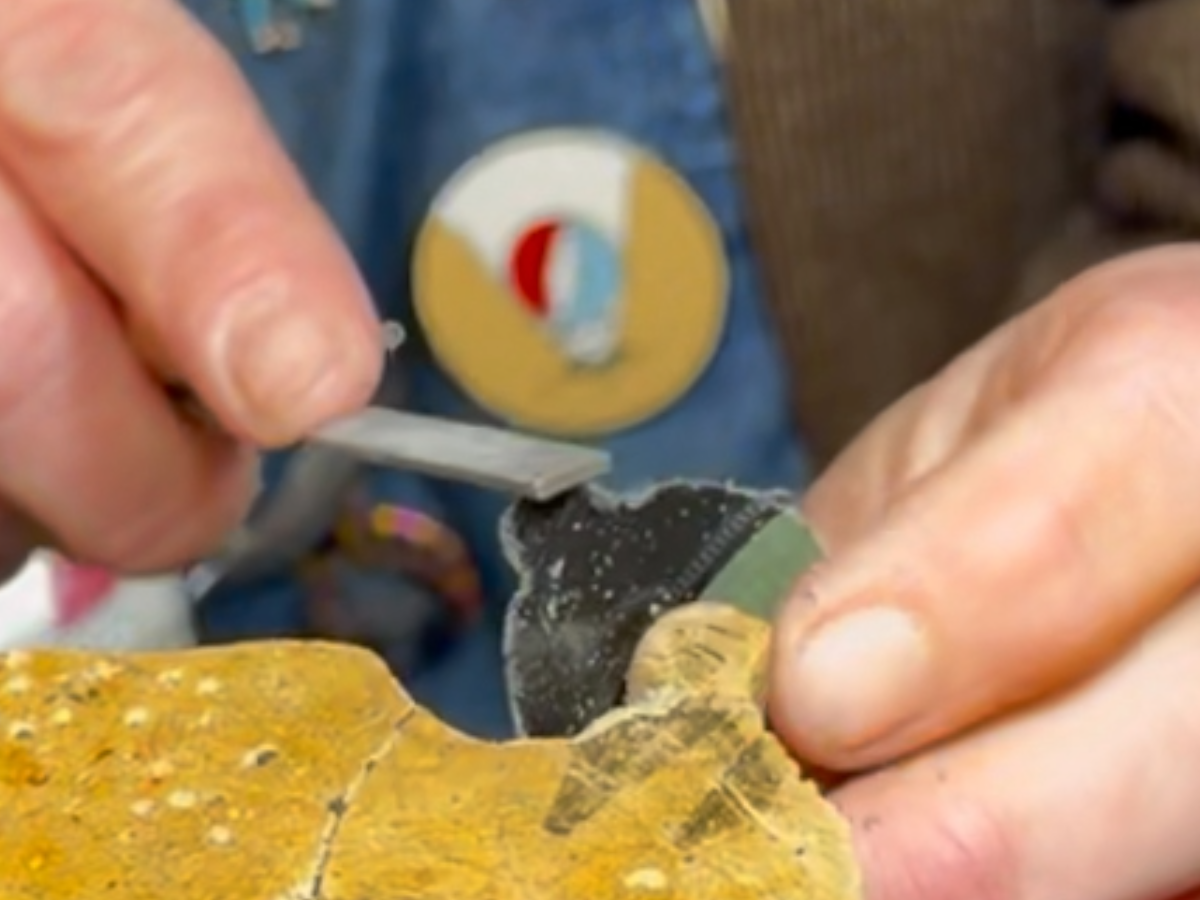
Shape and Refine
Every reVinyled piece is meticulously hand filed using traditional bench techniques. Saw marks and rough edges are refined until the silhouette is clean, balanced, comfortable, and ready for the next stage.
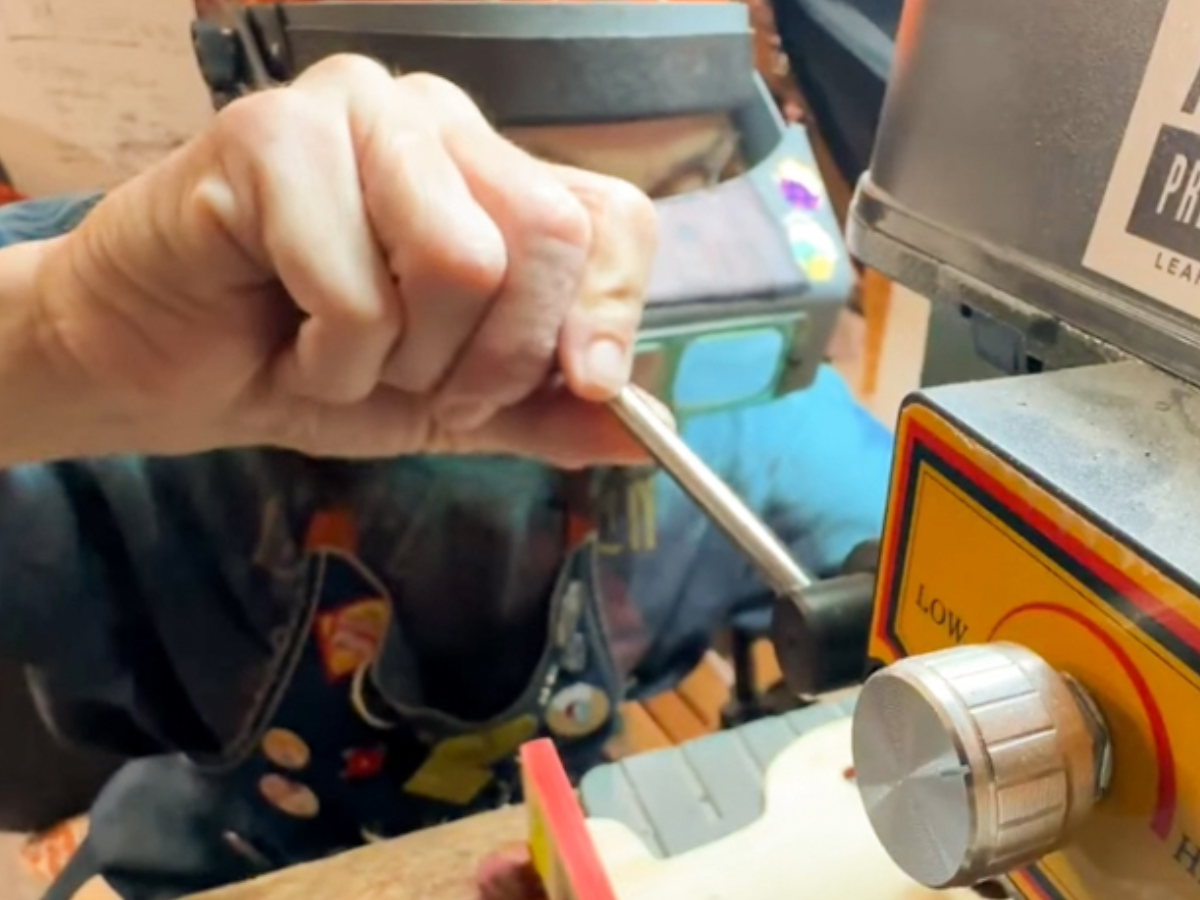
Drill and Finish
Each opening is placed and drilled individually. The piece is cleaned, refined, checked, and prepared for its final jewelry components while the grooves, label graphics, and color that made it worth choosing remain visible.
Then It Becomes Jewelry.
Stainless steel ear wires, posts, and the appropriate components are added by hand only after the vinyl has been fully shaped, drilled, and finished.
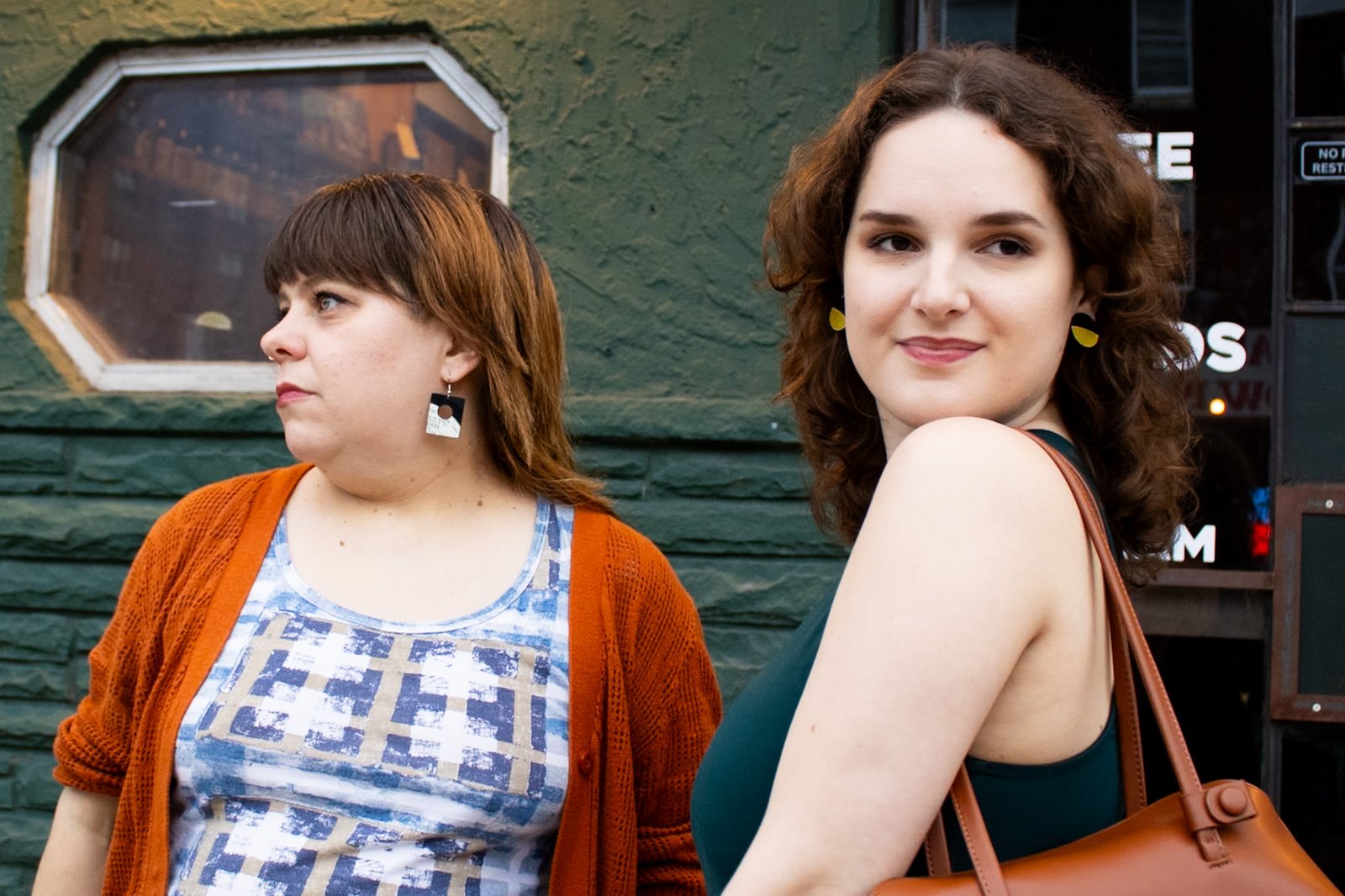
The Music Stays With the Pair.
Each finished pair remains connected to the exact album it came from. Both earrings originate from the same physical record, and that source information follows the pair beyond the workbench.
When It Leaves the Bench
The Record Becomes Part of Someone Else's Story.
What began as a damaged vinyl record leaves the studio as something completely different, while still carrying the grooves, color, label details, and music history that made the original record worth rescuing.
Once worn, the piece keeps moving. It gets noticed, gifted, collected, remembered, and talked about. Sometimes the connection is visual. Sometimes someone recognizes the artist, album, label, or song. Either way, the record has found another way to be part of the conversation.
The record may have stopped playing, but its story keeps moving.
Made by Hand. Made to Be Worn. Made to Be Remembered.
Explore the wholesale collection and bring rescued vinyl records, handcrafted jewelry, and real music history into your shop.